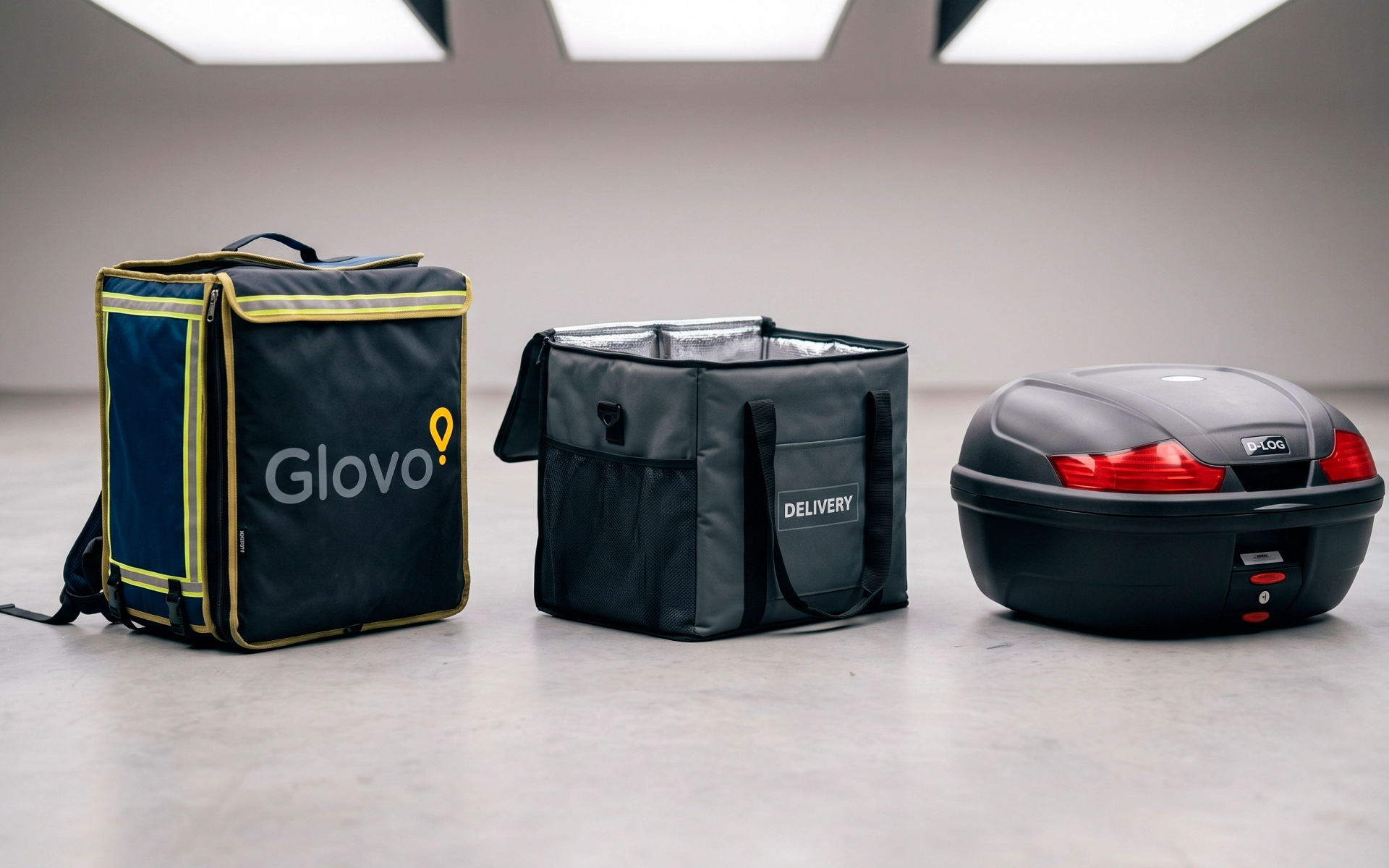
Revenue shown in the app does not reflect your actual income after expenses. Fuel, rental, partner commission, maintenance, and car wash costs can consume up to half of your earnings. To understand how much remains for a taxi driver or courier after expenses, you need to keep accurate financial records. Let’s look at how to track income and expenses in taxi driving and delivery, and how to calculate profit in delivery.
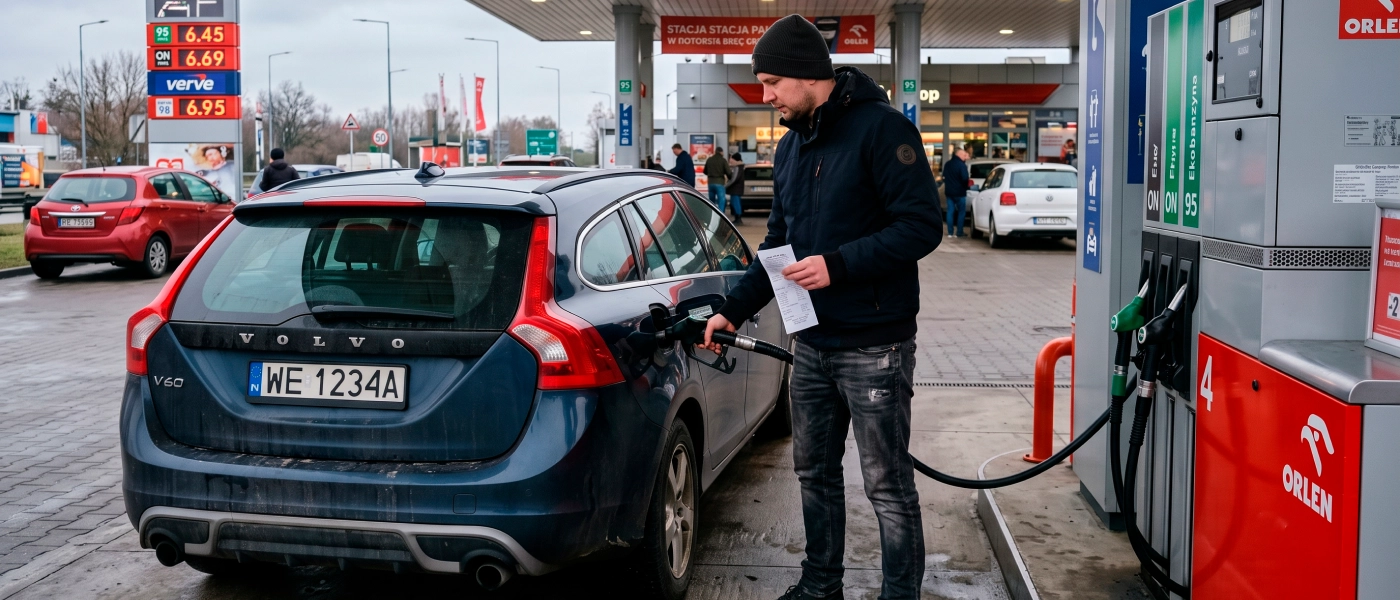
How to Start Tracking Income and Expenses in Taxi Driving or Delivery
The main secret to successful financial management is consistency. If you try to reconstruct a month’s worth of events and financial transactions afterward, you will inevitably miss dozens of small expenses: windshield washer fluid, parking, a cup of coffee at a gas station, or tire inflation.
To make income and expense tracking for taxi drivers and couriers effective, define your basic reporting periods:
- Work shift. Record the odometer reading, fuel costs, and actual earnings immediately after finishing work;
- Week. The main reporting period, since Uber, Bolt, Glovo, and Wolt issue payouts every seven days. This is the best time to reconcile your balance;
- Month. A period for analyzing fixed expenses (taxes, insurance, rental, ZUS) and calculating your overall net profitability.
Step 1. Where Drivers and Couriers Should Track Their Earnings
Your accounting tool should be simple and always within reach. You can choose one of four popular options:
- Google Sheets. The ideal choice. Your data is stored in the cloud, your taxi income and expense spreadsheet is accessible from your smartphone right inside your vehicle, and formulas automatically calculate totals;
- Excel. Suitable for those who prefer reviewing their numbers on a laptop at the end of the week;
- Mobile apps. Convenient for quickly recording expenses on the go, but less flexible for specific calculations (for example, cost per kilometer in taxi driving);
- Notebook or phone notes. A simple option for getting started, but it makes it difficult to calculate total net profit over a long period.
Step 2. What Work Shift Data Should You Record
Track the key metrics so that your courier or taxi driver earnings spreadsheet reflects the real picture:
- Date and platform (Uber, Bolt, Glovo, Wolt);
- Hours worked and number of completed orders;
- Total mileage for the shift (including dead mileage);
- Gross income (fares, bonuses, tips, cash payments);
- Work-related expenses (gasoline, diesel, LPG, charging, car wash, parking);
- Payment method (cashless payments and cash received).
Step 3. How to Create an Income and Expense Tracking Spreadsheet
Create a simple structure where the main calculations are performed automatically using formulas.
| Date | Platform | Hours | Mileage (km) | Income | Fuel/Charging | Other Expenses | Net Result |
|---|---|---|---|---|---|---|---|
| 10.10 | Uber | 9 | 180 | 450 PLN | 90 PLN (LPG) | 15 PLN (car wash) | = Income – Expenses |
| 11.10 | Glovo | 7 | 45 | 280 PLN | 10 PLN (E-bike) | 0 PLN | = Income – Expenses |
Connect to Uber
Learn about the cooperation terms with Promin Partner and start working through Uber with transparent statistics and stable payouts
Step 4. How to Track Income from Uber, Bolt, Glovo, and Wolt
Record your data based on the weekly report rather than when the money reaches your bank card. When entering a driver’s earnings for a shift or a courier’s daily income, separate it into the following categories:
- Order fares and surge pricing;
- Platform bonuses and tips (cashless and cash);
- Compensation payments (for cancellations or waiting time);
- Cash payments, the commission for which is deducted from the cashless balance.
Step 5. How to Track Expenses for Taxi Drivers and Couriers
Separate your expenses into variable and fixed costs:
- Variable (daily). Fuel (gasoline, diesel, LPG, charging), car wash, minor maintenance, parking;
- Fixed. Platform and partner commission (Uber/Bolt driver income and expenses), rental or leasing (car, scooter, electric bike), scheduled maintenance, tires, insurance, taxes, and ZUS.
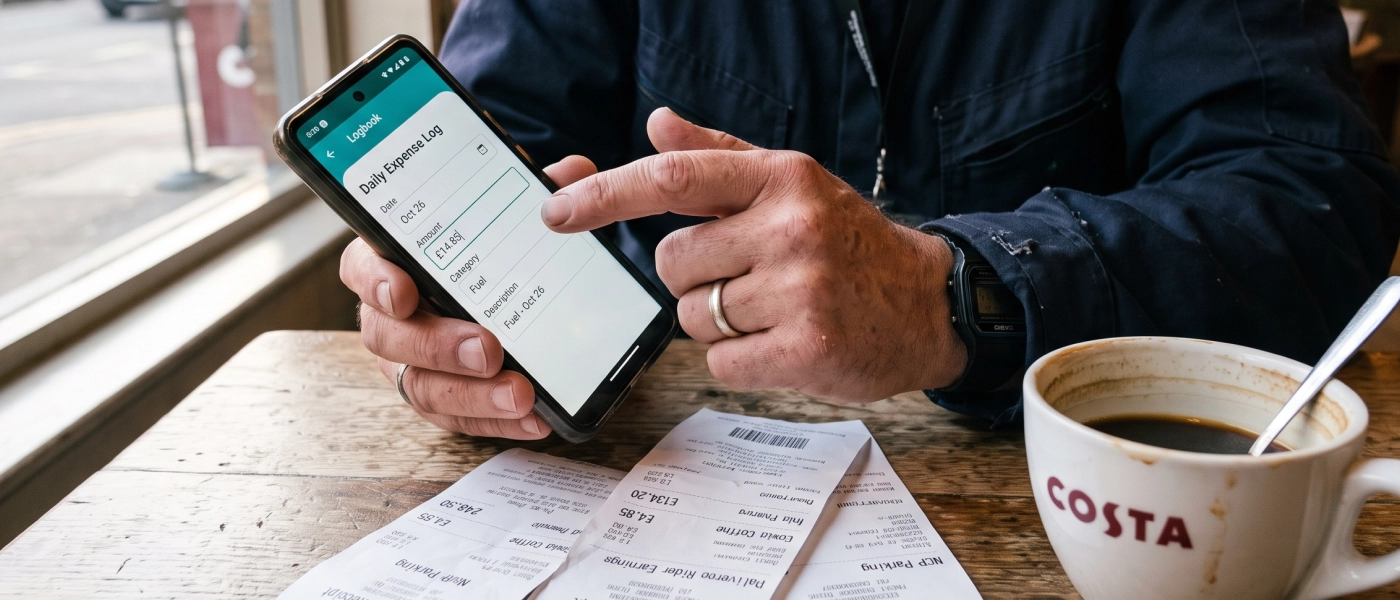
Step 6. How to Allocate Rental, Insurance, and Fixed Costs
Fixed costs (rental, OC/AC/NNW insurance, taxes, scheduled maintenance) are paid weekly, monthly, or annually. To ensure your taxi driver expense tracking is accurate, these amounts should be allocated proportionally across your working days.
Example: if the car/bike/scooter rental costs 500 PLN per week and you work 5 days, record 100 PLN as a fixed expense for each shift in your spreadsheet. If your insurance costs 1,200 PLN per year (100 PLN per month), add 100 PLN to your monthly expenses, even if the actual payment was made six months ago. This will allow you to see the true cost of each working day.
Join Glovo
Learn about the cooperation terms with Promin Partner and start working as a courier with transparent conditions and regular payouts
Step 7. How to Calculate the Net Income of a Taxi Driver or Courier
Use the following formula: Net Profit = Gross Income – Variable Expenses – Fixed Expenses – Commissions and Taxes
Example of a calculation for one shift (taxi in Poland):
- Gross income: 500 PLN (including a 50 PLN bonus and 20 PLN in tips);
- Fuel (LPG): 80 PLN;
- Car wash: 20 PLN;
- Car rental: 70 PLN/day;
- Partner commission and tax: 40 PLN.
Net income = 500 – 80 – 20 – 70 – 40 = 290 PLN
As a result, your net income is 290 PLN, not the 500 PLN shown in the app.
Step 8. How to Verify That Your Earnings Calculation Is Correct
At the end of each week, reconcile your recorded data with the actual movement of funds.
Verification checklist:
- Reconcile your gross income. The total in your spreadsheet should match the final line in the aggregator’s email report;
- Check cash payments. Subtract the cash you received from the cashless payout;
- Review your bank statement. The actual transfer from your partner to your card should equal the following formula: Cashless Income – Platform Commission – Partner Commission – Taxes – Withheld Cash Payments;
- Account for tips. Make sure that cash tips have not been mistakenly recorded as platform income.
How to Summarize Your Income and Expenses Weekly and Monthly
Prepare a weekly and monthly summary report to analyze your performance trends:
- Compare your hourly taxi driver income on different days of the week. This will help you identify the most profitable shifts;
- Evaluate your cost per kilometer in taxi driving or delivery. If the cost per kilometer increases, it is time to check your fuel consumption or adjust your driving style;
- Track the ratio of income to expenses. Under normal conditions, taxi driver expenses in Poland should not exceed 35–45% of total turnover (when using your own vehicle, including depreciation) or 50–60% (when renting a vehicle).
How to Track Earnings When Working Across Multiple Apps
If you combine multi-platform delivery or ride-hailing services (Uber, Bolt, FreeNow, Glovo, Wolt, Uber Eats, Bolt Food), create a single column called “Platform.”
Do not split fuel expenses by service during your shift, as this makes the process unnecessarily complicated. Record your total daily fuel expense, while entering revenue separately for each app. At the end of the week, your courier or driver earnings tracking template will allow you to filter the data and determine which service generated the highest profit per delivery or ride.
Join Bolt
Learn about the cooperation terms with Promin Partner and start working through Bolt with transparent calculations and regular payouts
The Most Common Income and Expense Tracking Mistakes
Avoid these five common mistakes that can disrupt your financial records:
- Filling in records “from memory” once a month. This will almost certainly cause you to forget small expenses;
- Mixing personal and work-related expenses. Buying lunch or taking personal trips on weekends should not be included in a courier’s transportation expenses;
- Recording payouts twice. Entering income both when you receive the report on Sunday and when the money reaches your bank card on Tuesday;
- Ignoring depreciation. Failing to set aside funds for future maintenance or tire replacement;
- Ignoring cash payments. Failing to track cash transactions distorts the calculation of the aggregator’s commission.
Conclusion
Systematic accounting is not bureaucracy—it is a practical way to optimize your working day and increase your final net profit. Understanding how to calculate your real earnings in taxi driving or delivery will allow you to avoid unprofitable shifts, choose the most suitable vehicle, and monitor the accuracy of financial settlements with your partners.

FAQs
How should I account for fuel if my vehicle is used for both work and personal trips?
Divide your work mileage shown on the odometer by the total mileage for the day or week, and allocate the corresponding percentage of fuel expenses to your work.
How should I record cash orders that are deducted from the app payout?
Record the cash as income. The aggregator will deduct the commission for those orders from your cashless balance, so your bank payout will be lower.
How should I account for a bonus or adjustment related to the previous week?
Enter such monetary adjustments as a separate line in the current reporting week with a note (for example: “Uber bonus for the previous week”). This will keep your records consistent with your actual bank balance.
Should I account for depreciation if my vehicle has not required any repairs yet?
Yes. Even if your car, scooter, or bicycle is in good condition, every kilometer reduces its service life. Set aside 5–10% as a reserve for future repairs.
What should I do if my bank payout does not match the Uber, Bolt, Glovo, or Wolt report?
Check deductions for cash payments, partner commission, and taxes/ZUS. If there is still a discrepancy, contact support.
Do I need a separate spreadsheet for tax records and personal accounting?
Yes. Official invoices, receipts, and tax reporting must comply with the laws of your country. Your personal accounting is necessary to analyze your profitability.
Stay informed
We break down complex topics in simple language and share insights and news. Subscribe so you don't miss a thing.

Subscribe