A phone for taxi and delivery work is your primary working tool, and your income depends directly on it. Today, you’ll learn which device specifications to pay attention to before buying, whether Android or iPhone is better for delivery and taxi work, and what you should never try to save money on.
Why a Phone for Taxi and Delivery Work Is So Important
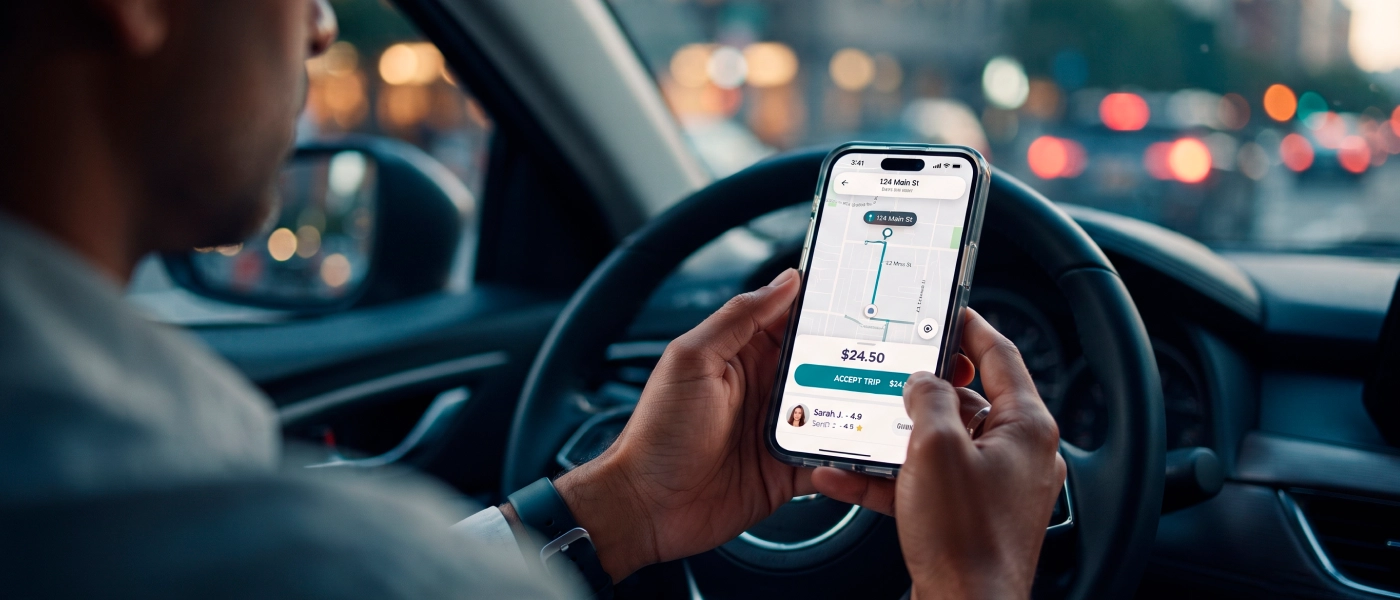
In the passenger transportation and logistics industry, a mobile device is subjected to heavy daily workloads. Apps such as Uber, Bolt, FreeNow, Glovo, Wolt, and Uber Eats run continuously, constantly exchanging data with their servers.
A reliable phone for delivery and taxi work is essential for the following tasks:
- Receiving orders. A weak processor or insufficient memory can cause the app to freeze, making you miss an order;
- Accurate positioning. Continuous satellite navigation for route planning;
- Fast communication. Calling customers, messaging platform support teams, and using instant messengers;
- Photo verification. Regular identity verification (selfies), vehicle condition inspections, or sending photos of completed deliveries.
Join Uber
Learn about Promin Partner's cooperation terms and start working in taxi services with transparent statistics and stable payouts
Android or iPhone for Taxi Work: Which Should a Driver Choose?
There is no single correct answer, as each platform offers its own advantages for drivers. When deciding which phone to choose for taxi work, compare the features of both systems:
- Affordability and repairs. Android smartphones are available across a wide range of price categories, and repairs are generally less expensive;
- App stability. iPhones are known for excellent optimization, which is why an iOS-based phone for Uber and Bolt is less likely to freeze and generally runs more smoothly;
- Battery life and charging. Many Android manufacturers offer ultra-fast charging and higher-capacity batteries;
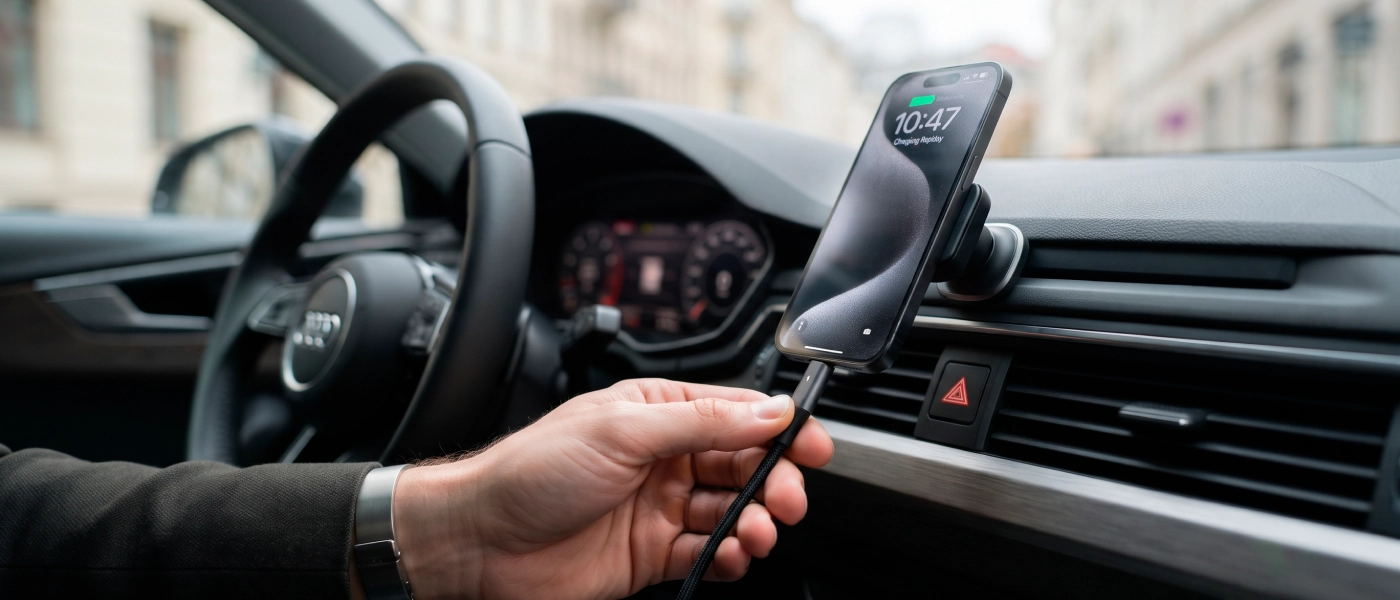
- Accessory compatibility. Apple smartphones have a vast ecosystem of high-quality MagSafe magnetic mounts that securely hold the device on the dashboard.
Smartphone for Couriers: Which Specifications Matter Most for Delivery Work?
For couriers, the requirements for a mobile device are noticeably different. Here, the gadget’s physical durability in harsh outdoor conditions becomes the top priority.
When choosing a reliable smartphone for a courier, pay attention to the following specifications:
- Long battery life. You need a phone with a good battery for courier work that can provide at least 6–8 hours of continuous screen usage;
- Screen brightness. The display should remain easy to read even in direct sunlight;
- Water resistance. An IP67 or IP68 protection rating is essential to ensure your smartphone for delivery work doesn’t fail during rain or snowfall;
- High-quality camera. Autofocus should perform flawlessly even at dusk, allowing you to quickly send clear proof-of-delivery photos.
Join Bolt
Learn about Promin Partner's cooperation terms and start working through Bolt with transparent conditions and regular payouts
Battery, Charging, and Overheating: What to Check Before Buying a Phone
A constantly active GPS, maximum screen brightness, and running work apps drain a smartphone battery incredibly fast. When choosing a phone, consider the following:
- Fast charging support. Power Delivery or Quick Charge technology allows you to recharge your device during short breaks;
- High-quality cables and adapters. Cheap cables often fail to provide sufficient current, causing the phone to continue discharging even while plugged in;
- Overheating issues. During summer, a phone mounted in direct sunlight inside a car while charging can overheat almost instantly. Position the device in front of the air conditioning vent for continuous cooling, and in winter, protect it from excessive cold outdoors.
GPS, Display, and Internet for Navigation in Uber, Bolt, Glovo, and Wolt
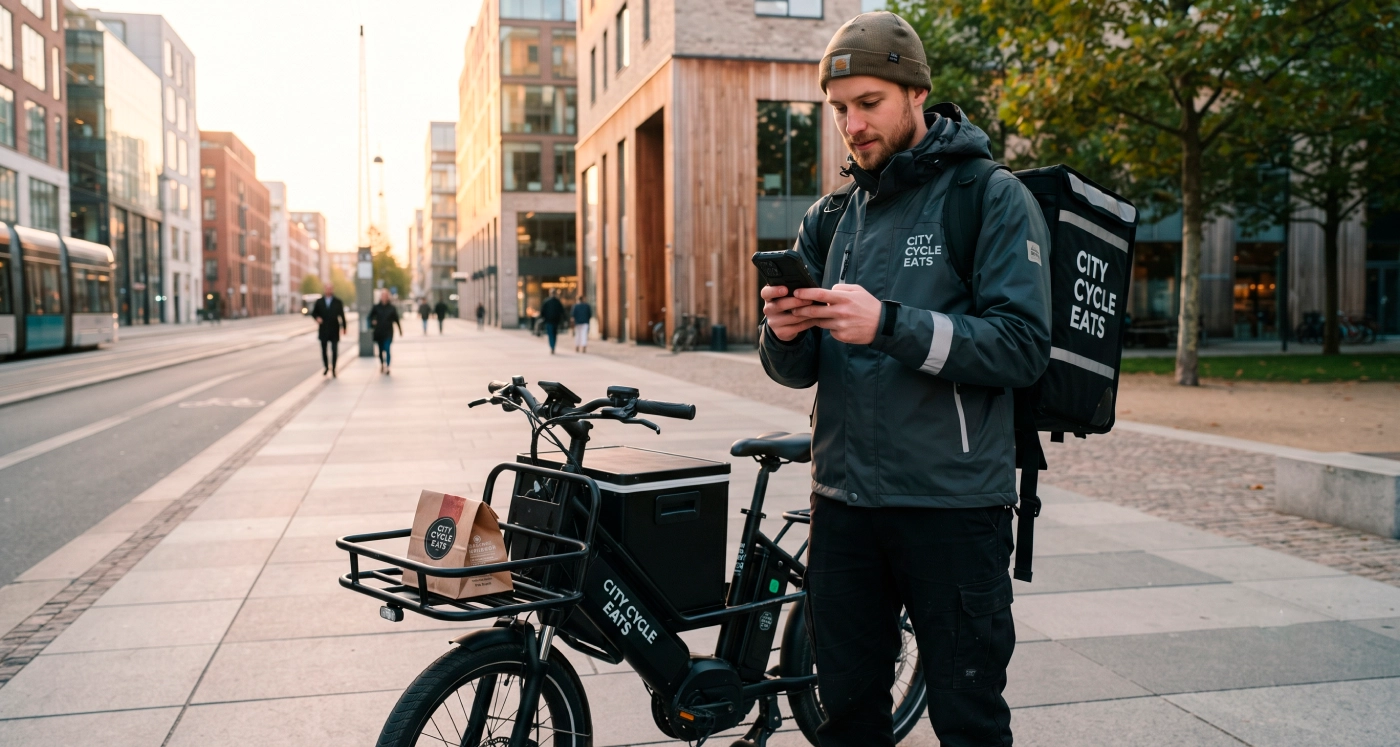
The speed of completing orders directly depends on how quickly and accurately your device calculates the best routes.
- Accurate geolocation. Choose a smartphone with a good GPS for taxi work that supports all major satellite navigation systems for precise positioning in dense urban environments with high-rise buildings;
- Display for map reading. A phone for taxi and delivery navigation should have a screen size between 6.1 and 6.9 inches, making routes easy to read;
- Stable internet connection. Support for modern 4G/5G standards ensures you’ll instantly receive new orders and real-time traffic updates.
Join Glovo
Learn about Promin Partner's cooperation terms and start working as a courier with transparent conditions and stable payouts
How Much Storage and RAM Do You Need for Taxi and Delivery Apps?
Don’t try to save money by buying the cheapest smartphone with weak specifications, as your delivery or taxi app, navigation, messenger, music, banking app, and camera may all be running simultaneously.
Your phone should have at least 6 GB of RAM, while 8 GB is the recommended choice. As for internal storage (ROM), the current minimum is 128 GB.
New or Used Phone for Work: Which Is More Cost-Effective?
Buying a new smartphone guarantees an official manufacturer’s warranty, a battery in perfect condition, and several years of operating system security updates. However, it also costs more.
Buying a used device is attractive because of its lower price, but it comes with many risks for commercial use:
- Battery wear. Check the battery health (for iPhones, it should be at least 85%);
- Charging port condition. The charging connector should not be loose or lose connection;
- GPS module performance. Open a navigation app outdoors and make sure the smartphone quickly detects satellites and maintains an accurate location;
- Display burn-in. AMOLED screens often suffer from burn-in caused by static elements (such as a previous owner’s navigation interface), making information harder to read comfortably.
Phone Accessories for Drivers and Couriers
Safe and efficient work on the road is impossible without accessories that make using your phone easier:
- Reliable mount. A magnetic car mount or mechanical holder that securely keeps your smartphone in place;
- Charging equipment. A high-quality car charger with support for fast charging protocols;
- Power bank. A high-capacity power bank (at least 10,000–20,000 mAh) that can keep your device running throughout the day;
- Protective accessories. A shockproof case with raised edges around the screen and a high-quality tempered glass protector to prevent expensive repairs;
- Handlebar mount. A secure bicycle or scooter handlebar mount with vibration damping and reliable water protection;
- Additional options. An earpiece or headset for communication, as well as eSIM or dual SIM support for separating personal and work plans.
Conclusion
The best phone is one that offers reliable battery life, smooth performance, accurate GPS, support for all required apps, and enough endurance to last through an entire working day. Knowing exactly which phone to choose for delivery or taxi work will protect you from frustrating technical failures, reduce stress, and help significantly increase your net daily income.
FAQs
Which phone should I choose for taxi work in Poland?
Buy a mid-range Android smartphone or a used iPhone starting from the iPhone 12. The key requirement is 6–8 GB of RAM to ensure delivery and taxi apps can run simultaneously without issues.
Which smartphone is suitable for a Glovo, Wolt, or Bolt Food courier?
Choose a water-resistant device with a battery of at least 5,000 mAh and a bright display. Rugged smartphones (Blackview, Ulefone) or mid-range models from Xiaomi and Realme are excellent choices.
Why does my phone overheat in the car while working?
Overheating is caused by active GPS, high screen brightness under direct sunlight, and charging. Mount the device near the air conditioning vent and use original charging cables.
Stay informed
We break down complex topics in simple language and share insights and news. Subscribe so you don't miss a thing.

Subscribe